Journey to Scotland: A Long-Awaited Adventure — Chapter 6

Orkney Islands — Across the Pentland Firth to Scotland’s Ancient Archipelago
Our journey began at dawn as we set out eastward toward John O’ Groats, the northernmost tip of mainland Scotland, where we were to embark on the next leg of our adventure. The anticipation built as we neared the ferry terminal, with the wind carrying a salty tang and the promise of discovery. We boarded a ferry to cross the Pentland Firth, the legendary waters separating mainland Scotland from the Orkney Islands, an archipelago famed for its Neolithic history, dramatic sandstone cliffs, and thriving seal colonies.
Across the Pentland Firth
The ferry ride lasted about an hour and fifteen minutes. We kept our eyes peeled for the region’s iconic wildlife, hoping for a glimpse of the elusive puffin, playful seals bobbing in the waves, or even the majestic Orca whales known to traverse these northern waters. The rolling sea and brisk air set the tone for our exploration into Orkney’s ancient past and vibrant present.
The Italian Chapel and Highland Cows
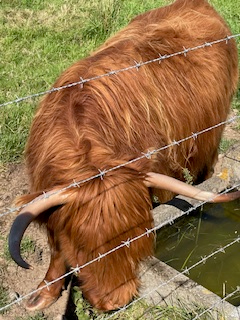
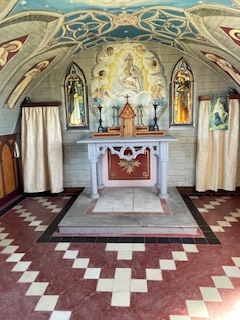
Upon arrival, our first stop was the remarkable Italian Chapel, a symbol of hope and resilience built by Italian prisoners of war during World War II. The chapel’s ornate craftsmanship and poignant history offered a unique glimpse into the human stories woven into Orkney’s landscape. Just outside, we encountered our first “hairy coos”—the endearing Highland Cows—whose shaggy coats and gentle demeanor charmed us all and provided a delightful photo opportunity.
The Stones of Stenness
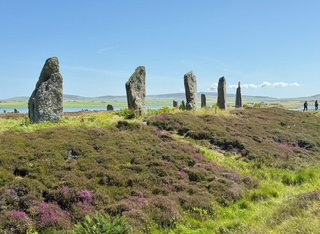
We continued overland, navigating the island’s narrow and winding roads. Our next destination was the Stones of Stenness, one of Scotland’s oldest stone circles, dating back at least 5,000 years. Standing among these ancient monoliths, we felt a profound sense of connection to the peoples who once inhabited these lands. The stones, silhouetted against the northern sky, evoked the mystery and majesty of Orkney’s prehistoric heritage.
Skara Brae: A Window into Neolithic Life
Our exploration of Orkney’s ancient sites continued at Skara Brae, a 5,000-year-old Neolithic village that lay hidden until a violent storm in 1850 revealed its secrets. The site is breathtakingly well-preserved, with distinct houses, stone furniture, household goods, and central hearths offering an intimate look at daily life in the distant past. We wandered through the village, marveling at the ingenuity of its builders and the tangible links to a civilization that flourished millennia ago.
Kirkwall and St. Magnus Cathedral
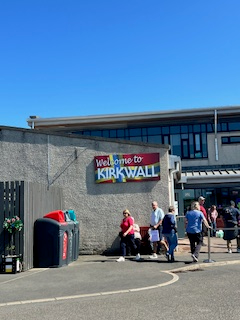
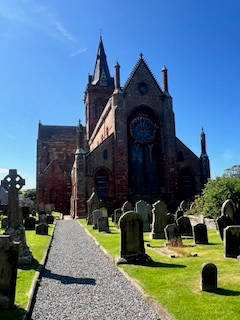
Our final stop was the town of Kirkwall, Orkney’s capital. Here, we strolled through the charming streets, enjoyed local snacks, and took in the impressive sight of St. Magnus Cathedral. Founded in 1137, this is the oldest cathedral in Scotland, its imposing structure and tranquil graveyard bearing silent witness to centuries of island history. The cathedral’s red sandstone walls glowed in the afternoon light, offering a fitting conclusion to our day of discovery.
Return to Thurso
Tired but fulfilled, we boarded the ferry for our return trip and headed back to our hotel in Thurso. The journey was quieter, with the group reflecting on the day’s remarkable sights and experiences. The Orkney Islands had offered us a tapestry of history, nature, and culture—a chapter in our travels we would long remember.